The Elsewhere
Survival Guide.
A field manual for raising, inhabiting and dismantling a six-day town in the Monegros desert. Elsewhere isn’t somewhere you visit. You make it appear.
Nobodies Collective Official Regional Burn
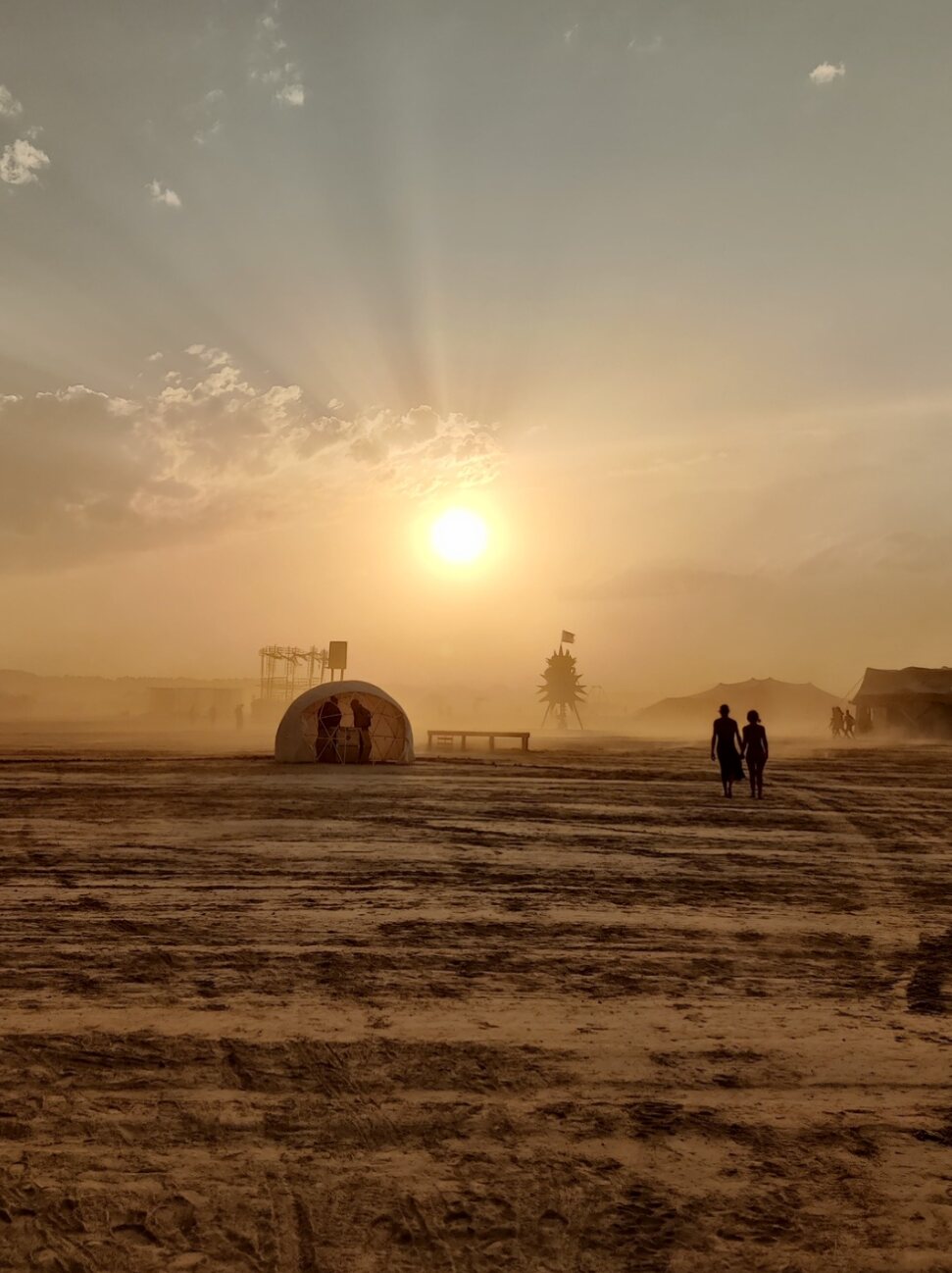
Contents.
Seven chapters. Read them in order — or skip to the section that matches whichever crisis is current.
- 01What is Elsewhere?
- 02Get Involved
- 03Get Prepared
- 04Surviving On Site
- 05Sharing the Desert
- 06Practical Info
- 07Safety Info
Prefer paper? Download the printable PDF — print it, fold it, stash it in your tent.
Timeline.
Confirmed milestones for Elsewhere 2026. Mark them in your calendar; the desert won’t wait for you.
March
14 Mar — Volunteer ticket sale opens.
20 Mar — Public ticket sale opens. Wave 1 pricing closes 14 April.
April
19 Apr — Barrio & Placement applications open.
Sign up on Humans — humans.nobodies.team — to browse roles and shifts.
May
4 May, 20:00 CEST — Coach tickets (Barcelona ↔ site) on sale.
Buy your gear. Water containers, shade, rebar, gaffer.
June
~12 Jun — Placement crew arrives.
~15 Jun — Build period opens. Pack and re-pack.
July
7 → 12 Jul — Elsewhere happens.
~22 Jul — Strike ends. Desert returned to dust.
Website
nobodies.team — sanitised meeting notes, FAQ, and policy updates as they land.
Discord
The primary hub. Working groups, ride-share threads, governance updates, real-time chatter.
Humans
humans.nobodies.team — register as volunteer, member or collaborator. Browse shifts, vote, coordinate.
What is
Elsewhere?
Elsewhere is a six-day participatory gathering in the Monegros desert, organised by Nobodies Collective, a member-owned, non-profit Spanish association (NCA). As of 2026 Elsewhere is an officially sanctioned Regional Burn under the Burning Man Organization. It runs on the ten Burning Man principles, on radical participation, and on whatever you decide to bring to it.
There are no spectators. There are no VIPs. There is no them — only us, and we’re all in it together. You’re the audience and the performer. You build the barrios, you make the art, you cook the meals, you sweep the playa.
If you’ve come hoping to find the shared ethos and familiar faces from previous gatherings in this desert — you’re in the right place.
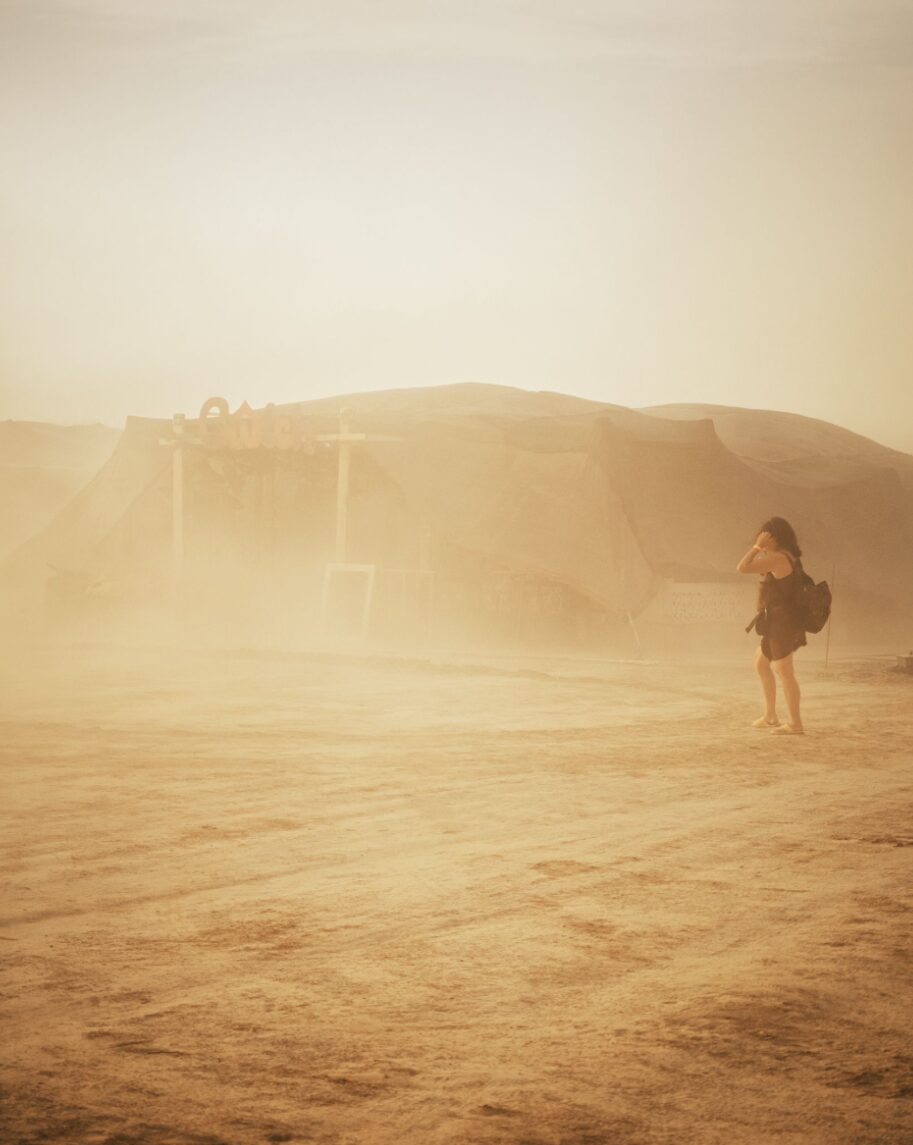
You don’t go to Elsewhere. You make it appear.
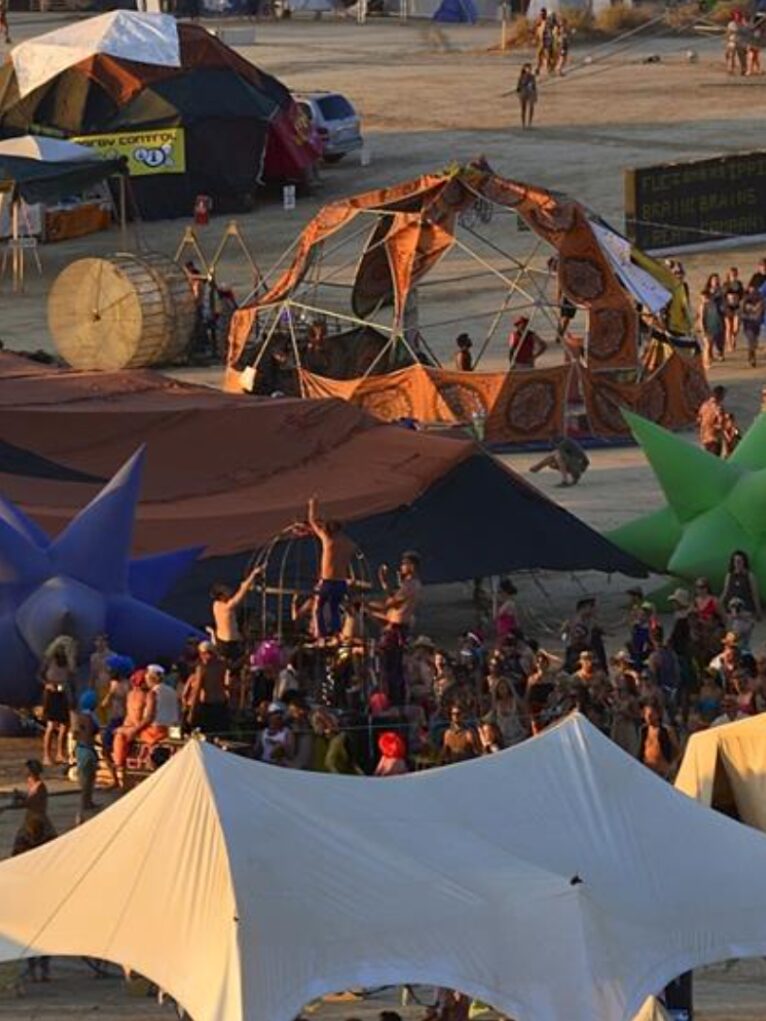
About this guide.
Everything you need to know to make it through six days in the desert without losing your dignity, your friends, or your water bottle.
Print it. Fold it. Stash it in your tent. If you bought a ticket for someone else, make sure they get their own copy too.
This edition went to print in June 2026. Some details may shift before July — confirm anything operational against the FAQ on nobodies.team and the latest pinned posts on Discord.
Nobodies.team
The official site. FAQ, board statements, low-income ticket policy, transparency notes.
Discord
discord.gg/Xmj6YbFwSM — the live nervous system of the community. Department channels, governance, ride-shares.
Humans
humans.nobodies.team — sign up for shifts, apply as collaborator or member, receive votes.
First thing to know: Elsewhere is nothing like the events you’ve been to before.
10 Core Principles.
Not commandments. Not rules. A shared compass — ten ideas the community keeps coming back to when figuring out how to behave in a desert together.
If we can make each other’s lives easier or better, we will. Lend the tool. Share the shade. Hand over the cup.
Anything you bring can become MOOP — Matter Out Of Place. Your rubbish, your responsibility. Always.
Food, water, shelter, a hug, a quiet half-hour — source what you need. Then ask the people around you when self-reliance has run out.
What you put in is what comes back. The work is the play; the play is the work. There’s no audience here.
A song, a beer, a hand pulling a stake. Gifts come with no expectation of return — that’s the whole point.
Be here, be elsewhere, be present. The whole town disappears in two weeks. Don’t miss it through a screen.
No vendors, no sponsors, no logos. Removing money from the equation is what makes gifting and cooperation real. Ice is the one exception.
Welcome people the way you’d like to be welcomed. Tolerance isn’t enough — active inclusion is the work.
A motley crew of self-reliant strangers, held together by the simple wish to belong to something bigger than ourselves.
Wear it, dance it, sing it, build it. Express yourself out loud — and remember that everyone around you has the same right.
Stronger together, every time.
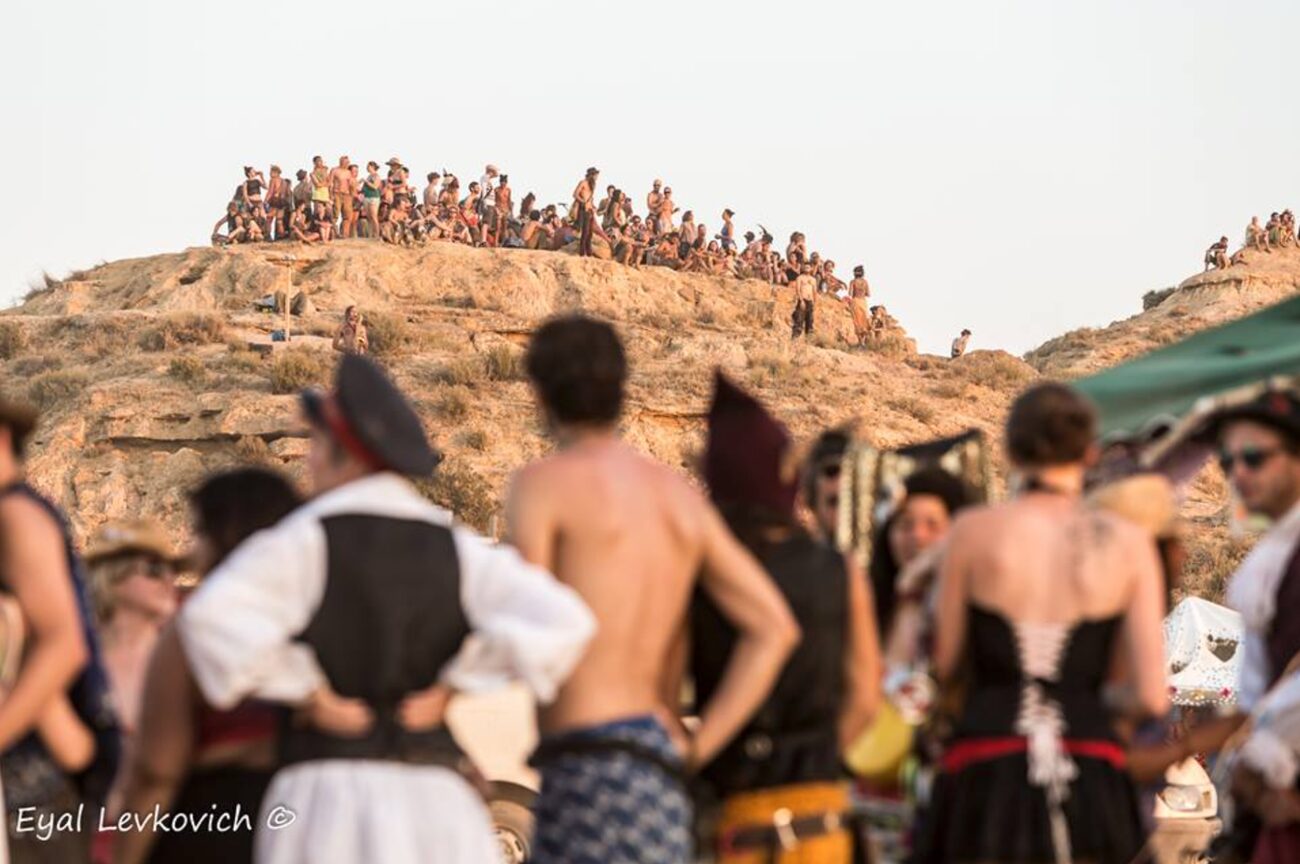
What to expect.
Nobody wants you to fall ill, hurt yourself, or worse. To make sure there’s a safety net under all of this, dedicated crews come on site three weeks ahead of gates — raising shade, stringing power, building the toilets, planting the city.
Art
Made by participants. Big sculptures, tiny gestures, things you stumble onto in the dust. The open desert is where it lives.
Artomobiles
Slow-rolling art vehicles — motorised or pedal-powered. They might give you a lift. They might play you a song.
Barrios
Themed neighbourhoods built by groups of participants. Apply for placement and contribute something public — a bar, a workshop, a stage — and you get a plot.
Free Camp
Don’t want to join a barrio? Camp on your own. First-come, first-camped. You handle your own water, food, shade.
Werkhaus
The home for build and strike crews — a communal shade structure, a place to rest, eat, and camp alongside the people building the city.
Gate & Greeters
The single entry/exit. Gate checks ticket and ID and gives you a wristband. Greeters welcome you. No tickets sold at the door.
Fire Arena
The only zone where fire performance is permitted, after dark and under supervision.
Middle of the Desert
The communal heart — a big shaded space with a sound system. Talks, workshops, gigs, dance floors, and afternoon naps when the sun is too much.
Cantina
The crew kitchen. If you work a 6-hour event-time shift, a meal is part of the deal. Heart of the operation during build and strike.
Malfare Complex
The 24/7 safety/medical/welfare hub. Cruz Roja (Red Cross), Welfare team, and the perimeter Nomads all live here.
Welfare
A 24-hour quiet, sober, confidential space to land, breathe, decompress. Open round-the-clock; trained listeners on shift.
Info Point
The nerve centre for participants. Sign up for shifts, ask anything, find ride-shares, hand in lost & found.
Ice
The one and only thing for sale on site. Open daily 13:00–19:00, around €2.50 for a 2 kg bag. Cash only.
Inclusion Hub
A safe, sober space for families and anyone needing a quieter rhythm. Daily community-led activities away from the bigger sound systems.
Toilets
Fully enclosed portable toilets, plus urinals for all genders scattered around. Wheelchair-accessible and menstruation-friendly options on site.
Recycling Zone
Where your sorted rubbish goes. Volunteer-run — lend a hand. Open daily 11:00–19:00 (Tue–Sat), 9:00–18:00 on last day.
At Gate, have ready
Your ticket (printed or on a charged phone) AND a valid ID where the name MATCHES the ticket. Names don’t match — you don’t come in. No exceptions.
Pro tip
Sort your rubbish at your tent BEFORE you bring it to the Recycling Zone. If you don’t, you’ll do it there — in the sun — with an audience.
Harsh environment.
Elsewhere happens in a real desert — hot, dry, exposed, with none of the comforts of home. Adjusting takes time.
Don’t be surprised if your first day or two feels rough. Things you can shrug off in your normal life will hit harder out here. Go slow.
Temperatures of well over 40°C / 105°F. Respect the sun. It is not the place to work on your tan.
Siesta
Stay out of the sun from 1–4pm. Try a siesta — that’s what the locals are doing.
Cover Up
Hats, shades, sunscreens, wet clothes and shelters minimise your exposure.
Hydrate
3–5 litres per person per day. Drink before you’re thirsty. Keep urine clear.
Get involved.
Humans
humans.nobodies.team — the official platform. Make an account, browse departments, sign up for shifts, apply as collaborator or member.
Pro tip → Volunteers get access to a dedicated ticket sale ahead of the public wave.
Elsewhere is built by the people who show up for it. There is no ‘them’ running the event — only us.
- Arriving early for setup or staying late for strike
- Volunteering for an event-time shift
- Making and bringing art
- Running a workshop, playing music, putting on a show
- Creating and running a barrio
Three levels of involvement.
Nobodies Collective is a member-owned association. Beyond ‘volunteer’, you can engage at three different levels — each with its own rights and responsibilities.
Members (Asociados)
The democratic backbone. Vote at the General Assembly, stand for the board. Apply via Humans — needs 3+ months of meaningful contribution OR a successful lead role at a similar event in Spain.
Collaborators
People doing prep work outside event-time — docs, designs, plans, builds. Sign a light agreement (IP & GDPR). Often invited to vote on community matters.
Volunteers
Anyone with a ticket who picks up a shift on site. No extra paperwork — the Code of Conduct you accepted at checkout is enough.
Where to plug in.
No special skills required — only motivation. Mix and match.
- Like to cook? → Cantina.
- Patient ear, soft voice? → Welfare.
- Speak many languages? → Interpreters.
- Soldering iron? → Power, comms, sound & light.
- Answer to everything? → Info Point.
- Heavy machinery? → Logistics.
- Care about the land? → Leave No Trace.
- Walk & help others? → Malfare / Nomads.
- Shopkeeper energy? → Ice.
- First friendly face? → Gate & Greeters.
- Support family & child participants? → Inclusion Hub.
- Spreadsheet wizard? → Production & admin.
Build (~15 Jun → 7 Jul)
Three weeks of raising the city from dust — power trenches, shade structures, mapping streets, feeding the crew. Hard work, deep friendships, free meals at Cantina.
Strike (12 → ~22 Jul)
Many will tell you Strike is the best part. Small crew, long evenings, last-of-the-pantry dinners, and chasing every speck of MOOP until the desert looks untouched.
Year-round
The association runs all year. Coordinators, leads, working groups. Join Discord and the Humans app to plug in beyond July.
Bring some art.
Art at Elsewhere isn’t a programme curated for an audience — it’s the gift you bring to a community that’s gifting back. From a sound piece in a quiet corner to a sculpture you can climb inside, all of it counts.
Register with the Art team
Whether you’re showing up with a finished piece, a half-baked idea, or planning to improvise something on site — register with Art before you build. They’ll help with siting, safety, materials, and a small grant if your project qualifies.
- Artists bring their own materials and tools — a small backup kit is on site.
- Anything metal over 2 m must be grounded.
- Art grant applications close 17 May.
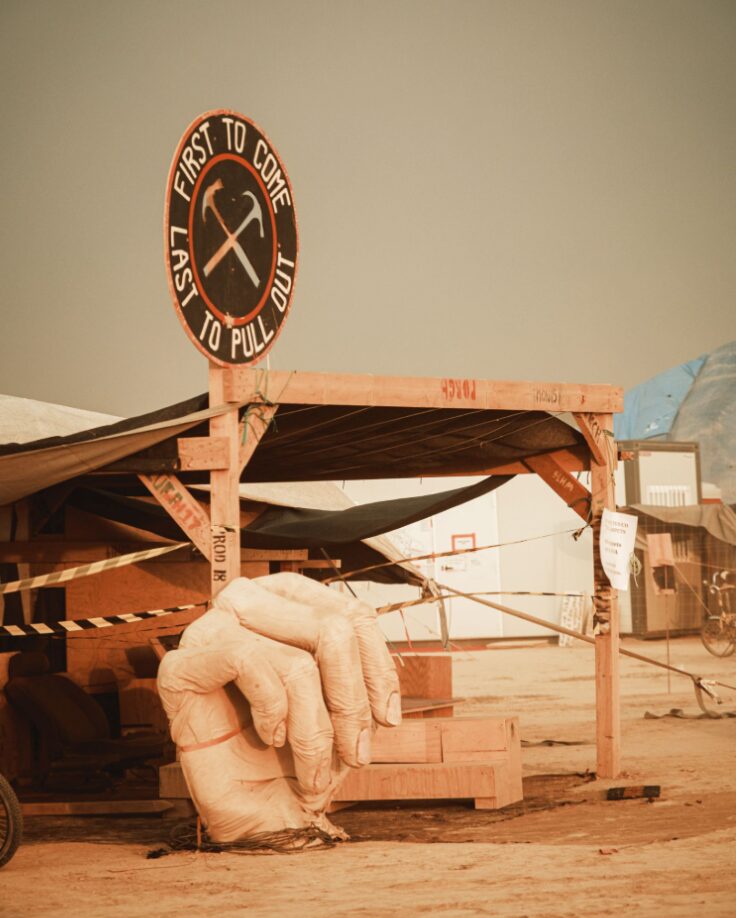
Artomobiles
Mutant vehicles — motorised or pedal — must be pre-registered before arrival. On site, every Artomobile is inspected for general safety. Pass the check, get your Artomobile Pass, then you can drive on site. Sound rules apply too — the desert is small and sound carries.
Innovation Projects
Make the city better. Faster build, smarter lighting, less water, greener power, fewer vehicles, cleverer waste streams. Doesn’t need to be participatory or artistic — back-of-house and functional is great.
Workshops & Performances
Dance, music, talks, yoga, knot-tying, fermentation, life drawing, philosophy, repair cafés. Anything goes. Submit your event to the WWW Guide so people can find it.
Forming a Barrio
Communal camps pool resources — split costs, share kitchens, divide labour, build something public the rest of the city can use. A bar, a stage, a tea house, a trampoline, a ball pit. Apply for placement via the Barrios team.
Get prepared.
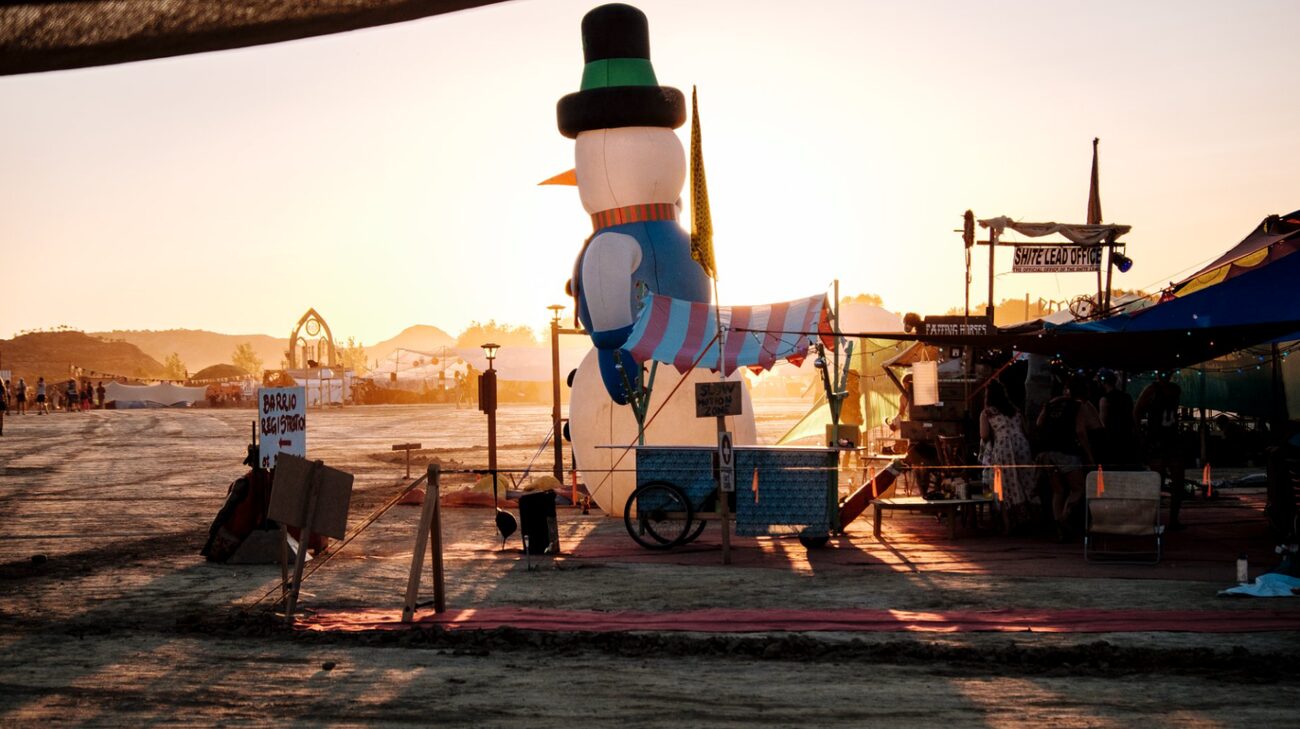
Now that you’ve read the basics, let’s talk about you. What you need to know — and the stuff you need to bring.
Please remember
Everything you bring to Elsewhere MUST be brought back home after the event. Even broken. Even dirty. Even if you don’t want it anymore. Waste & Recycling Zone volunteers will only collect your food and beverage garbage.
What to bring.
Pack light, pack smart, pack twice. Use this as a master checklist.
Documents
- Valid ID card or passport
- Printed ticket with your name (or charged phone)
- European Health Insurance Card or proof of alternative
Clothing & co.
- Towel
- Sunglasses
- Closed-toe footwear (skip the flip flops for walking)
- Layers for very hot days & possibly freezing nights
- Goggles — for frequent, really dusty winds
- Hat, scarf, cap — anything to block the sun
- Rainwear — for a desert, it gets really muddy
Camping gear
- Tent and shade structure
- 12-inch (30 cm) tent stakes or rebar (it gets very windy)
- Multi-season sleeping bag or extra blanket
- Sleeping mat — the ground absorbs body heat
Accessories
- Water bottle
- Sunscreen
- A solid cup — reusable, no glass. Mandatory.
- Portable ashtray (smokers)
- Torch with batteries — LED head torch is best
- Belt or backpack — you’ll be carrying stuff all the time
- Strong mosquito repellent
- Eye wash, extra contacts, your glasses
- Plant sprayer / water gun to cool off
- Ear plugs & eye mask — not everyone sleeps when you do
Hygiene
- First aid kit
- Hand sanitiser
- Eco-friendly soap
- Any medications (prescription & non-prescription)
- Transparent rubbish bags & ziplock bags for MOOP
Cool storage
If your medications need to be kept cool, plan ahead. Contact welfare@nobodies.team with any questions or concerns.
Probably also bring.
- Penknife or multitool
- A pair of work gloves
- Plastic bottles or tennis balls to cap dangerous rebar stakes
- Cable ties
- Gaffer or duct tape
- A mallet
- A shovel
- A watch
- Portable ashtray
- Lip balm / chapstick
- Hairbrush
- Tampons, sanitary towels, mooncup
Forbidden items.
Leave anything that can break or blow away in the wind at home.
Glass
Bottles, jars and anything that can shatter.
Feathers & glitter
Even biodegradable. Strike can’t tell the difference.
Excess packaging
Remove outer layers (i.e. cardboard packaging) before you arrive.
Explosives
Aerial flares, rockets, firearms (incl. BB / air / paintball).
Fireworks
Burning torches, charcoal BBQs, fire risks.
Solid-fuel fires
Barbecues or solid fuels of any kind.
Sky lanterns
Also known as Chinese lanterns.
Pets
Only pre-registered service dogs allowed.
Astroturf, styrofoam
Plastic bags, disposable cups.
Living plants
And — most importantly — a bad attitude.
Don’t lose your stuff.
Every year a lot of things go missing. A few small habits make it more likely your things find their way home.
- Label your cup and water bottle with a sharpie or name tag.
- Replace phone lock screen with your contact details.
- Flip flops disappear constantly — make yours easy to spot.
- Spent hours on a costume? Add a label with your contact.
- If a mug has been in the family for generations… maybe leave it home.
Surviving
on site.
Once you’re here, the desert tests everything. Camp smart, eat well, drink more water than feels reasonable, and respect the toilets.
Where do I put my tent?
Elsewhere is divided into several sound zones, from loud to quiet. A map of the sound zones and freecamping areas is available at Gate.
- Freecamping is first come, first served — no saving spaces before the event.
- The Quiet Zone has a NO vehicles, NO generators, NO amplified sound policy.
- No camping on the perimeter road, or outside the camping areas.
- Stay at least 100 m away from any flood areas — your tent could get washed away.
Shelter.
Avoid cheap instant shelters that won’t survive a storm. Shade material should be at least 80% UV resistant — better, use two layers.
Use rope or cables to tie your shelter down. 12-inch (30 cm) tent stakes or rebar are needed to secure your tent against strong winds.
Pro tip
Put weight in your tent. If your pegs fall out, your tent won’t fly away. Bring metal sheets to put around the lames during windy days.
Food & water.
There is no centralised water supply. We recommend 6–8 litres per day per person — drink, shower, cook, wash dishes.
Bring enough food for your entire group for the duration. Dried, tinned and other non-perishable food is recommended. Fresh fruits and vegetables won’t keep — only enough for the first three days. Snacks are nice and make great gifts.
Cooking equipment.
Bring your own cup, bowl, cutlery and washing gear. Disposable items are the biggest source of rubbish.
Gas is the only accepted fuel — no charcoal or solid-fuel barbecues. Stay far from any flammable materials including tents and shelters, and ensure equipment is in good condition.
How to use the toilets.
Only the 3 P’s should go in any toilet: Pee, Poop, Paper. No wet wipes, tampons, plastic, or any other objects.
Each portaloo is regularly stocked with toilet paper and hand sanitiser. Toilets are looked after by an army of awesome Shit Ninjas — each barrio is responsible for one toilet block. Which barrio it is is posted inside the wooden box next to the toilets.
If there’s a problem (lack of paper, sanitiser, etc.), let them know so it can be fixed ASAP, to everyone’s benefit.
Important
Please don’t poop anywhere other than the toilets provided. Human faeces are toxic and can cause serious illness.
Generator & gas safety.
- If you bring a generator, don’t camp in the no-sound zone. Build sound insulation around it — or share a bigger, quieter one.
- Place generators within your camp boundary, ≥10 m from the perimeter road and ≥25 m from vegetation.
- All generators must have a grounded earth spike — certified by our team and a local electrician.
- Gasoline tanks & gas bottles: shaded, far from heat sources, CE-marked.
- Big tanks must be fenced off. Gasoline stored ≥15 m from the generator.
- Rubber components in good condition, away from heat.
Caution — Yellow flag
A yellow flag means buried electrical cable. Do not dig.
Fire extinguisher
6 kg ABC powder. Even with cooking equipment only, keep one near the kitchen.
Thunderstorms
Site is protected by lightning rods, but be careful. Don’t lie on the ground — stand with feet close together, or sit on a chair without ground contact. Inside a container or car is safe (Faraday cage). After a strike, stay inside a few minutes for the metal to discharge. All metal structures over 2 m high must be grounded. Don’t approach a generator unless qualified.
You & the Monegros desert.
There are things you can handle in the default world that will be much harder to endure at Elsewhere. Here’s how the desert will affect you — and how to protect yourself.
Sun / Heat
Stay out of the sun 1–4 pm. Try a siesta. Hats, sunglasses, sunscreen, wet clothes, shelter.
Wind
Beautiful dust devils. Powerful enough to make tents fly away. Fix everything to the ground properly.
Dust
You’ll taste it, eat it, breathe it. Goggles aren’t just to look cool — they protect you.
Storms & Rain
Splendid AND dangerous. Dig trenches around your tent to avoid becoming part of a newly formed river.
Terrain
Hills are loose clay — not for climbing. Areas around the site contain holes and deep cracks. Leaving the site = injury risk.
Biohazard
The river nearby has chemical runoff from farming and is NOT clean.
Are you drinking enough water?
Some signs you’re not:
- You don’t carry a water bottle at all times.
- You sip instead of drinking deeply.
- You wait until you’re thirsty (too late).
- You become cranky.
- Your urine is anything but clear and abundant.
Symptoms of dehydration: headaches, stomach cramps, abdominal pain, constipation, flu-like symptoms. Get them to shade and contact Welfare. Alcohol, caffeine and other drugs raise dehydration risk.
Rehydration fluid recipe (10 L)
Mix well and rehydrate. Or bring favourite sports / electrolyte sachets.
Leave no trace.
You take responsibility for your environmental impact. Remember — there must be no evidence you were ever at Elsewhere.
The rules.
- Remove all surplus packaging before departure.
- MOOP (Matter Out Of Place) doesn’t belong on the ground — pick it up if you see it.
- Use transparent rubbish bags so volunteers can sort safely.
- Clear rubbish daily from your camping area / barrio.
- Take rubbish to the Recycling Zone during opening hours.
- Leave your barrio / camp at least one hour before the W&R Zone closes.
- Heading to town? Drop sorted rubbish in the recycling containers there.
- Take your stuff back home — if you brought it, you can take it back. We can’t take any broken tents, chairs, rugs or similar large items.
- Leave time to help pack & clean up.
- Before leaving, do a sweep of your tent area.
The W&R Zone.
The designated site for rubbish and recycling. Used with care and respect — volunteers shouldn’t deal with the stuff you don’t want to. Open daily 11:00–19:00 (Tue–Sat), 9:00–18:00 on Sunday.
Yellow
Metal, plastic & tetrapacks.
Green Bell
Glass, bottles and jars.
Blue
Clean paper and cardboard. No tissue paper.
Black
General waste — keep minimal.
Compost Holes
Compost & dirty tissue. No meat, fish or dairy.
Greywater
Don’t throw it in the toilets or compost. Use eco-friendly soaps and detergents. Filter to remove large elements. Food waste → compostable (no meat / fish / dairy). Then either collect to dispose of in town, create an evaporation pond / delta, or spread in surrounding bushes. The earth here is not very porous — don’t dig deep ponds, the water won’t soak away and you’ll attract flies and mosquitoes.
From dust to dust ✦ Leave only footprints ✦ This is your home.
Living with
other Nobodies.
Children, inclusion, pronouns, photography, drones, sound. The art of sharing a temporary city without making each other miserable.
Children.
From the standpoint of Elsewhere and the law, a child is anyone under 18. Check barrios’ opening hours to minors and the WWW Guide for family-friendly workshops. Beyond this, Elsewhere does not dictate what is appropriate for your kids — as their parent or carer, you do.
Kids can be more affected by the harsh environment than adults. Lost under-12s will be taken to Welfare until their adult carer is found. Inclusion Hub is a hub for families.
Adult-only matters.
Serving alcoholic drinks to minors is illegal — they wear a different coloured wristband.
Engaging in sexual acts where minors could be present is a major crime in Spain. If you choose to engage, do so in private or in adult-only spaces — marked on the Playspaces Map at Info Point.
Inclusion Team
Supports participants with disabilities — contact us about mobility, big-font guides, carer tickets and any other specific needs — families, BIPOC participants, LGBTQIA+, anyone with needs or concerns beyond other participants. Contact us at inclusion@nobodies.team and find more at nobodies.team/inclusion
About pronouns.
A pronoun is a word that replaces a noun (especially names) — she/her, he/him, they/them. Any person can use any pronouns. Help each other use the right pronouns for a person.
Introduce yourself
Introduce yourself with your name and your pronouns, no matter if you talk to one person or a group. Ask the other person about their pronouns and try your best to remember them.
Forgot the pronouns?
Ask them again. If the person isn’t there anymore, use their name (or they/them) until you can ask again.
Made a mistake?
Correct yourself. No need to over-apologise — that can make it worse.
Talking to a group
“Welcome everyone”, “Hi folks”, “Hello people”, “Hi all.” If you host a workshop, be clear about who it’s for and introduce yourself with your pronouns.
Menstruation Stations.
Accessible toilets equipped with a hand-washing station, for people who are on their period and need a hygienic way to change menstrual products. These toilets are called TAP (“Total Access! Period.”) on site.
Note: these toilets have a limited capacity. Please only use them if you are dealing with your menstruation or have accessibility needs. If the water buckets for the hand-washing stations are empty, please be so kind and refill them at the nearest barrio.
Stations are locked with a code lock so they stay clean for the people who need them. Get the code at Welfare and at Info Point. If those are closed, get it at Welfare.
Make pronouns visible
Pin a button. Write them on your name tag. Put them in your bio. Help others remember.
Consent.
At Elsewhere, we’re free to express ourselves, share, co-create, and be in the moment. But when our actions directly alter someone else’s experience, we need to get their consent.
Consent isn’t just about sex. It’s about checking in before acting on any desire involving others — including non-sexual touch, using other people’s belongings, gifting, and taking photographs.
My body is mine, your body is yours. Even casual, playful touching that seems normal might not be received well. The only way to know is to ask.
From a person who is able to consent. If they’re unconscious, sleeping, or too intoxicated, they can’t consent.
Don’t act if it’s anything but a clear, enthusiastic yes. Don’t try to persuade. Silence is not consent.
Easy to thank a yes. Harder, and more important, to thank a no.
Consent to one act doesn’t give consent for others. Keep communicating and adjust as the situation evolves.
Be aware of those around you. Check in on others, even strangers. Better to verify than allow harm to proceed.
Offer what creates mutual ease, care, or joy — not pressure, obligation, confusion, or emotional debt. Your intention does not override another person’s experience. If you’re unsure whether your desire, attention, energy, or presence is welcome, pause and check in.
Different actions carry different emotional, physical, social, and health risks. A yes does not erase responsibility for care, awareness, communication, or consequences. Be honest about the level of risk involved, with yourself and with others.
Consent is a big topic. For more information and some epic guides like the Relationship Survival Guide and the Guide to Navigating Sex+ Spaces at Burns, go to nobodies.team/consent
Give only what’s appreciated. Take only what’s offered.
If you experience a consent violation.
In case of emergency
Nomads, or anyone around, can help. Ask for help — ask anyone to find a Nomad. Nomads are Malfare’s representatives. They are sober, trained, have radios and are available 24/7 to assist with injuries, safety concerns, and interpersonal conflicts in confidentiality. They will get you whatever help is needed.
Welfare & the Safer Space
We offer 24/7 one-to-one support at Welfare. You can speak confidentially to a trained volunteer in a private, comfortable, air-conditioned cabin (the Safer Space). Safer Space team members of various genders and speaking different languages will be available either in the Welfare tent or on call 24/7.
If you’ve experienced a consent breach or intense incident, we are here for you. Sometimes memories of a past incident arise during the event — it can even be that you remember breaching someone’s consent. For whatever reason, if you are feeling in shock, vulnerable, or having difficulty being with your experience, please seek help and support others to do so.
Reporting an incident
If you think there is an immediate risk to the community from a participant at the event, speak to a Nomad or go to Malfare. Consent Incident Report Forms are available at Welfare, in a small yellow tent in the free camping area, and online through a QR code (every toilet has the QR code). Ask a Barrio Consent Lead or Safer Space team member for support filling the form. The reporting boxes are checked daily 15.00–15.30, Tuesday to Sunday.
After the event, the reports are handled by the Consent Response Leads (for more on our approach and processes see nobodies.team/consent). It is always worth reporting an incident — it will be handled confidentially and there are many ways it can help our community become safer.
Participant Code of Conduct
You agreed to it when you bought your ticket. Take a look at what it says. Important — contact information from your ticket may be shared, on request, with the Consent Response Leads in case of an identified violation.
Photography.
Always ask permission. Don’t take someone’s photo against their will. If they ask you to delete a photo you’ve just taken, please do.
If there’s a dispute, flag down a Nomads or come to Welfare so volunteers can mediate. Your right to take a photo never overrules someone else’s right to privacy.
Be careful about posting online. Make 100% sure every person in a photo is happy for it to be posted before it goes up. Don’t tag people without explicit permission. No photos for commercial use without written permission from Nobodies Collective.
Approved journalists wear “Media” tags — like anyone with a camera, you can ask them not to photograph you.
Drones.
To respect privacy and boundaries, unauthorized drone flight is not permitted on site during the event. You can fly OFFSITE — but stay 50 m horizontal from the site perimeter. Specific flights may be authorized by the Comms team beforehand.
Heads up
Unauthorized flights will probably be shot down with a giant slingshot.
Emotional survival.
Everything is tougher at Elsewhere.
This goes for the way you handle things, too. Interacting can feel too intense at times. You may feel a bit alone or alienated, without familiar comforts to rely on.
There are plenty of ways to deal with this — and the community is here to help. You don’t have to do it alone.
Don’t forget to read the Elsewhere Emotional Survival Guide.
Tips.
- Be gentle with your body.
- Seek help if you need it.
- State your boundaries and communicate — with strangers and loved ones alike.
- Have the experience that makes you happy.
- Connect in ways that make you comfortable.
- After Elsewhere, take time to reflect on your choices — at the event and in the default world.
Sound.
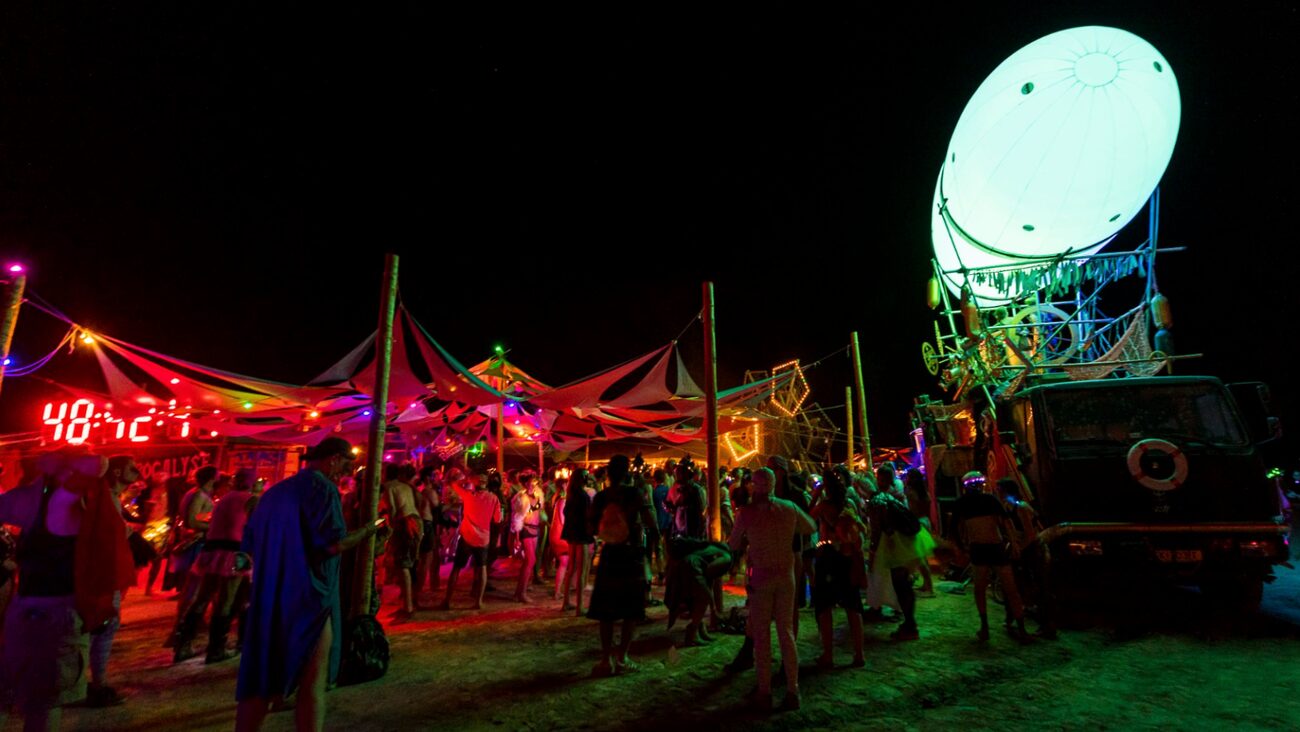
Elsewhere is a 24-hour experience on a small site. Not everyone will be sleeping, or dancing, when you are. Control how far your sound travels.
| Red Zone | Orange Zone | Yellow Zone | Green Zone | Blue Zone | |
|---|---|---|---|---|---|
| Sunrise → 11:00 | Living room party | Living room party | Living room party | Conversation level | Conversation level |
| 11:00 → Sunset | Discothèque | Bar level | Living room party | Conversation level | No sound |
| Sunset → 04:00 | Discothèque | Discothèque | Bar level | Living room party | No sound |
| 04:00 → Sunrise | Discothèque (until 7am) | Bar level (until 3am) | Living room party | Conversation | No sound |
Discothèque
Club level. No restrictions — but above 95 dB hearing loss may occur.
Bar Level
(Trendy) bar — medium sound system, not greater than ~1500 W per channel (max 95 dB).
Living Room Party
House party with normal speakers cranking it up. Within 5 m, raise your voice to talk. ~70–85 dB.
Conversation
5 m apart, hold a normal conversation. ~55–70 dB.
No Sound
Silent. NO noise above conversation level. NO sound systems. Generators & cars not allowed at any time.
Need help?
Check our Sound FAQ or contact sound@nobodies.team
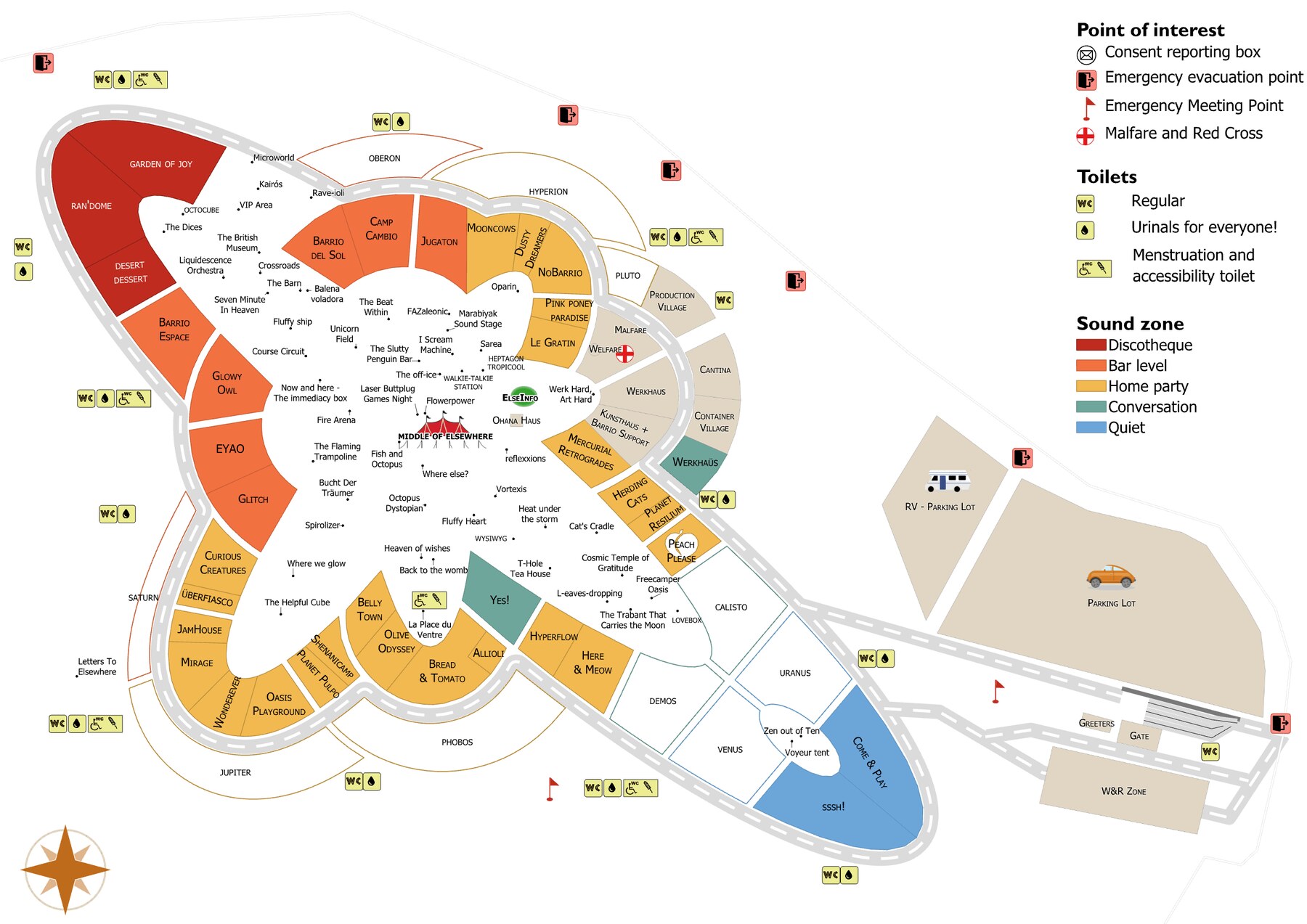
The map.
A bird’s-eye view of the temporary city — barrios, sound zones, toilets, points of interest, parking and the road to Gate. Match the zone colours to the sound table above.
Buying things.
Cheap is expensive. If you buy low-quality furniture, you’ll have to buy it again next year.
Money spent locally carries weight
Our local host community has been supportive of us in recent years — spending locally promotes the event and supports us. Please consider stopping and shopping en route, or enjoying a meal and a drink in Sariñena or other local towns. Several shops in Sariñena sell last-minute Elsewhere essentials — water bottles, camping items, sunglasses — and supporting local businesses is always preferable to certain online retailers.
Spanish schedules.
Small shops
9:30 → 13:30 and 17:00 → 20:00. Closed Saturday afternoon and Sundays.
Supermarkets
9:00 → 21:00, Monday to Saturday. Out-of-town supermarkets like Carrefour generally open 10:00 → 22:00, six days a week.
Almost nothing is open on Sundays. Only big malls and supermarket chains in Zaragoza and Huesca open the first Sunday of each month.
Gas (be careful — Spain has its own system).
Most hardware shops or the plumbing department of big DIY shops like Leroy Merlin sell small camping gas containers. 6 kg butane (butano) bottles are at Repsol, Campsa and Petronor service stations — including Sariñena. Leave a deposit, return the bottle. 12.5 kg bottles need a contract and bigger deposit.
Propane (propano) is hard to buy. Spanish gas bottles use a specific bayonet connector — make sure you have the right adapter. Some hardware stores sell converters.
Where to shop.
Castejón de Monegros
Closest small town to the site, but harder to reach due to poor road conditions. General store, petrol station (also sells ice), bakery, butcher.
Sariñena
Slightly bigger, wider choice. ATMs, larger supermarkets, hardware store (ferretería), pharmacy (farmacia), nearest health centre, two hotels, railway station (about 3 km from town).
Fraga or Lleida
Worth a look for groceries if heading from Barcelona or the north.
Huesca / Zaragoza
The regional commercial centres. Cash & carry (Makro — cardholders only), supermarkets (Carrefour), DIY & wood (Leroy Merlin, Brico Depot, Aki), general hardware, vehicle & tool rental.
Dress for town
Please remember to dress for civilization when you go into town. The locals have been very supportive of Elsewhere — supporting their businesses keeps the relationship warm.
Getting there.
Shared Cars
Carpooling is a cool way to travel with friends or make new ones. Reduces traffic, pollution, and travel costs.
Renting Cars
Available in regional commercial centres. Plan ahead — Spanish gas-bottle compatibility matters if you’re cooking.
Personal Vehicle
Use your own vehicle. Watch the road conditions, especially near Castejón.
Train
Nearest railway station is Sariñena — about 3 km from town. Bus stop is at the station.
Elsewhere Bus
Each year a dedicated team hires several buses, usually from / to Barcelona airport & train station. Check newsletter or website.
Plane
Closest airports: Zaragoza, Barcelona, Reus. Also useful: Girona, Bilbao, Madrid, Valencia.
Parking.
Elsewhere is a traffic-free event, except for Artomobiles on specific terms. When you arrive on site, you have two options:
Parking Lot
If you need your vehicle during the week (e.g. groceries) — get a Parking Lot Permit at Gate, place it behind your windshield. Unload first in your camping area, then move to the lot. Once parked, you can’t drive back in.
On-Site Parking
If you want your vehicle near your camping area / barrio — get an On-Site Permit at Gate, place behind windshield. You can’t move it until the end of your stay.
Driving rules.
- Gate road opens and closes 30 minutes before/after Gate operational hours. Arrive early — wait. Arrive late — turned away. No exceptions.
- No driving on site at night. Arrive at Gate after 21:30 — park overnight, walk on site. Retrieve vehicle after 08:00.
- Respect the 10 km/h speed limit on site. If you see dust in your rearview mirror, you’re too fast.
- Personal vehicles allowed only on perimeter roads. Artomobiles can drive in the central area.
Important — rain
If it’s raining, the last part of the road will be closed and no vehicles allowed. No exception. Stay in town, have a coffee, wait an hour after the rain stops.
Directions.
Start with the Repsol gas station (Avenida de Fraga 17, Sariñena) on your left and head out of Sariñena. Set km to 0.
GPS — Elsewhere 2026
41°40′45.4″ N, 0°09′04.3″ W — 41.679270, -0.151182
Gate opening hours.
Pre-event (early entry ticket required)
- Wed 1 → Sun 5 July: 10:00 → 22:00
- Mon 6 July: 14:00 → 00:00
We can only open after completing our permit inspection. We should be done by 14:00, but if you arrive exactly at 14:00 you might have to wait until the inspection is complete.
Event
- Tue 7 → Thu 9 July: 10:00 → 22:00
- Fri 10 July: 10:00 → 18:00
- Sat 11 → Sun 12 July: EXIT ONLY · NO ADMITTANCE
There is a security checkpoint 30 minutes’ drive from Gate. If you arrive there with less than 30 minutes until Gate closes, they will not let you in — do not cut it close. If you arrive on site after dark, you will have to leave your car at Gate and collect it the next day. If you arrive outside the official hours due to external influences, contact gate@nobodies.team.
Early entry
If you turn up at Gate before 6 July without an Early Entry ticket, you will be turned away.
Safety.
Read this carefully. In an emergency, you will thank yourself for having done so.
Emergency numbers
112 · +34 623 796 600
Dial 112 for all national emergency services. Or call Elsewhere’s direct line.
EU Health Insurance Card.
Health centres treat anyone for free, but you pay for medication at the pharmacy. If a hospital visit is required, you pay if you don’t have a European Health Insurance Card.
Sariñena
Centro de salud — 25 minutes away. Carretera Zaragoza, Avenida Zaragoza 10, 22200 Sariñena. +34 974 571 027 (emergencies) · +34 974 571 202 (bookings)
Huesca (hospital)
Over 1 hour away. Hospital San Jorge, Avenida Martínez de Velasco 36, 22004 Huesca. +34 974 247 000
Site evacuation.
Due to the size of the event, Elsewhere is required to have an approved evacuation plan and a means of communicating it to all attendees.
Everyone
Evacuate as directed by the Welfare Shift Lead and Welfare personnel (high-vis vests), via the designated routes.
Disabled People
Collected and taken to the evacuation point. Own vehicles may be used. Stop at Gate with a list of who was moved off site.
Red Cross
Decides whether those in their care can transport themselves, or need site vehicle / ambulance transport.
Intoxicated Participants
Escorted by friends or those prepared to use strength and persuasion to get them off site.
Barrio Leads
Ensure all camp mates are accounted for — especially in tents.
Parents
Responsible for their children at all times.
Fire safety.
Extreme wildfire risk
There is an extreme risk of wildfire in Los Monegros. There is a total ban on fire in this area. This is enforced by law.
This means…
- No fireworks, fire torches, firecrackers.
- Don’t flick away cigarette butts.
- No barbecues, campfires or other fires (gas BBQs & gas camping stoves are okay; no solid fuel).
- No kitchens or sources of heat within 10 m inside the perimeter.
- No playing with fire toys outside the Fire Arena and times.
If you spot a fire.
- Call for help. Make sure people understand your need.
- Move people away from the fire.
- Move flammables (wood, tents, gasoline) away as much as you can.
- Fight the fire up to your level of comfort.
- Expend no fewer than 2 extinguishers to combat the fire.
- Use dirt or water to continue putting it out.
Fire alarm & drill.
Two types of fire event would cause rapid evacuation of the site:
- A fire on site.
- A fire off site that threatens the event.
If Nobodies Collective personnel think the fire cannot be contained, a site evacuation will be performed. The Welfare Shift Lead is in charge of evacuation and may deviate from the protocol as the event unfolds.
Air-siren alarm
Go quickly to the meeting point (in front of Red Cross), leaving your belongings behind. Be ready to walk to the evacuation point — Ermita de San Miguel — unless instructed otherwise by Welfare personnel.
Fire drill — if you have an Early Entry pass, you must participate. The legal permit of the event depends on it. No joke.
Fire effects in your camp / art piece?
Contact us before the event at firesafety@nobodies.team
Don’t be a hero ✦ Don’t become part of the problem.
General Conditions of Participation & Access — 2026.
The purchase of the ticket and/or entry to the event implies the acceptance and agreement of the following terms and conditions, as participant.
1 · Disclaimer
The participant voluntarily assumes the risk of property loss, serious injury or death by attending this event, and assumes full responsibility and liability for their participation.
Art installations, theme camps (barrios), vehicles, events and performances are not owned or operated by Nobodies Collective S.L. The participant assumes any and all risk of injury or loss arising from their operation, and releases Nobodies Collective from any related claim. You assume risks of physical activity or work, and responsibility for protective equipment — using it when required and verifying its condition.
The participant agrees to hold Nobodies Collective, its officers, directors, members, employees, volunteers, representatives, agents, contractors, subcontractors and other participants harmless from any damages, injuries, losses, liabilities and expenses arising from participation in any programme, event, activity or service.
2 · Please Remember
The participant agrees to abide by these conditions, the rules in the Survival Guide, the principles of participation, and to comply with local and national Spanish law. All vehicles entering and exiting the event site are subject to search by Gate staff. Participants must bring enough food, water, shelter and first aid to survive one week in a harsh desert environment. Commercial vending is prohibited, as are firearms, solid fuels, fireworks, rockets and other explosives.
This is a Leave No Trace event. You are asked to contribute at least one hour of site cleanup in addition to your own camp before departure.
3 · Right of Admission
Children under 18 must be accompanied by their parent or guardian. The accompanying adult agrees to the contractual terms on behalf of the child and is solely responsible for them, holding Nobodies Collective harmless from any liability while at the event.
Conduct contrary to the Code of Conduct and the law leads to expulsion without re-entry, and notification to the competent authorities. Entering or remaining at the event without a ticket or valid wristband — or helping others do so — leads to immediate expulsion and notification to legal authorities. Entry is a revocable license.
4 · Early Termination of the Event
The ticket amount is non-refundable at any time after purchase if the event is canceled — including early termination due to harsh weather, acts of nature, governmental regulation or other conditions beyond Nobodies Collective’s control.
5 · Privacy
To protect privacy and free expression, use of images taken at Elsewhere (other than for personal use) is strictly prohibited without prior written consent of Nobodies Collective. Any image, sound, video or text captured during the event is assigned to the Organization, irrevocably. Sale, rental, lease or assignment of these elements to third parties before, during or after the event is prohibited. Any breach will be prosecuted; non-acceptance of this clause is cause for exclusion or immediate expulsion without right to reimbursement.
6 · Health Prevention & Safety
The event acts in accordance with the regulations of the Diputación General de Aragón on health matters, and may implement extraordinary prevention and safety measures in the interest of participants and local communities.
7 · Updates
Nobodies Collective may contact the participant by email or post with news. These terms may be updated — see the latest Survival Guide for the final version. The event and these conditions are subject to Spanish law. In case of dispute, the participant accepts the jurisdiction of the Courts and Tribunals of Barcelona. In case of translation discrepancy, the Spanish version prevails.
Be aware
Under Spanish law, the police can search your car with little suspicion. Remember to cooperate.
Welcome
home.
You don’t attend Elsewhere. You create it. Bring water. Bring patience. Bring something to give. See you on the Field of Dirt.
Back to Home